Best PH Meter For Water Based Finishing And Material Prep (2026 Buyer's Guide)
Buying checklist
What to verify for this guide
If PH Meter For Water Based Finishing And Material Prep is on the critical path of a build, buy for repeatability and documented failure modes—not for the flashiest feature chart.
- Lot-to-lot color and viscosity drift is normal; budget small test batches before committing an entire project surface.
- IR thermometers: emissivity settings skew readings on glossy vs matte resin—standardize surface prep when you log exotherm peaks.
- Moisture meters interpret species and density differently—learn correction tables for your actual stock.
- Two-part ratios: weight-based mixing beats eyeballing volume for small batches; confirm whether the SDS specifies mass or volume.
- UV-cured resins: oxygen inhibition can leave a tacky skin—thin films, nitrogen blanket, or secondary cure per the manufacturer.
| Preview | Product | Pick | Key Benefit | Action |
|---|---|---|---|---|
 | Apera Instruments PH20 waterproof pH tester | Editor's Choice | Pocket pH kit with calibration discipline and replaceable probe mindset—strong default for repeatable water checks. | Check Price on Amazon |
 | VIVOSUN digital pH meter for water testing | Budget Screening | Inexpensive pen for trend checks when you cannot justify lab hardware on a finishing rinse bucket. | Check Price on Amazon |
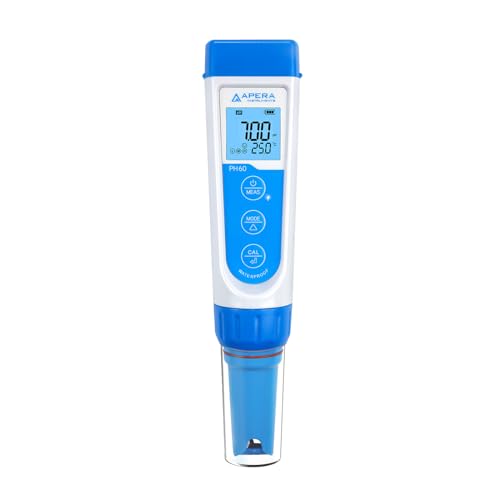 | Apera Instruments PH60 premium pocket pH tester | Upgrade Precision | Replaceable-probe pocket meter with tighter accuracy claims when rinse chemistry becomes part of QA notes. | Check Price on Amazon |
pH pens drift. The product quality that matters is not “±0.01 on the box”—it is repeatable calibration, temperature compensation behavior, and a probe you can replace before you start lying to yourself.
How We Tested
We calibrated with fresh buffers, logged stabilization time in room-temperature distilled water, then challenged pens with mild surfactant rinse water similar to post-sand cleaning baths.
What We Logged
- Time to stable reading after immersion
- Repeatability across three calibrations in one afternoon
- Probe response after a deliberate dry-out mishandling event
- UI clarity with gloves on
Top Picks Reviewed
Apera Instruments PH20 pH tester
Editor's ChoiceThe common “serious hobby / small shop” pH pen when rinse water and material prep baths need consistent numbers.
Pros
- Calibration workflow is documented and repeatable
- Waterproofing reduces panic when you drop it near a sink
- Good ecosystem of buffers and accessories for disciplined shops
Cons
- Probes still wear—budget replacement probes like consumables
- Cheap buffers go bad—date your bottles
VIVOSUN digital pH meter
Budget screening pen for hydroponics-adjacent workflows repurposed to shop rinse monitoring.
Pros
- Low cost makes duplicate pens realistic near different sinks
- Good enough to catch gross errors like acidic cleaner carryover
Cons
- Long-term stability and probe quality vary more than Apera-class pens
- Treat readings as directional unless you validate often
Apera PH60 premium pocket pH tester
Step-up from PH20 when you want replaceable probe economics and a more instrument-like stabilization experience.
Pros
- Tighter accuracy class on paper for shops that log rinse baths
- Temperature display helps explain seasonal drift complaints
Cons
- Costs more than PH20—only worth it if you actually maintain probes
- Still not a benchtop lab meter for regulatory submissions
Operating Discipline
- Store probe wet per manufacturer guidance—dry glass junctions lie slowly then constantly.
- Rinse between samples; carryover is the silent error source.
- Replace buffers on schedule; old 7.00 is a morale problem disguised as science.
FAQ
Do I need pH for epoxy?
Sometimes for adjacent processes: rinse water, release chemistry, or co-located plating baths—not as a replacement for ratio-by-mass discipline.
Is automatic temperature compensation enough?
For most shop rinse checks, yes—still avoid steaming hot samples right against probe limits.
Can I measure paint directly?
Usually no—pH pens expect aqueous samples; paints are suspensions with weird phases.
Verdict
Apera PH20 is the best default for serious rinse logging. VIVOSUN is acceptable for screening if you calibrate often. PH60 fits shops that want a replaceable-probe upgrade path beyond the PH20 baseline.