Best Digital Infrared Thermometer For Resin Exotherm Monitoring (2026 Buyer's Guide)
Buying checklist
What to verify for this guide
Use this checklist before checkout so Digital Infrared Thermometer For Resin Exotherm Monitoring choices survive the first honest week on your bench, not just day-one unboxing.
- Label printers: verify tape chemistry for alcohol wipes and shop solvents before committing inventory SKUs.
- UV-cured resins: oxygen inhibition can leave a tacky skin—thin films, nitrogen blanket, or secondary cure per the manufacturer.
- When pigments settle, remix protocol and shelf age change opacity—shake or stir discipline is part of the SKU.
- Platinum-cure silicone vs tin-cure: sulfur, tin, and some latex gloves can inhibit cure—match the SKU to your bench chemistry.
- Polymer clay and conditioning: old stock and temperature cycling change workability; plan conditioning time into batch schedules.
| Preview | Product | Pick | Key Benefit | Action |
|---|---|---|---|---|
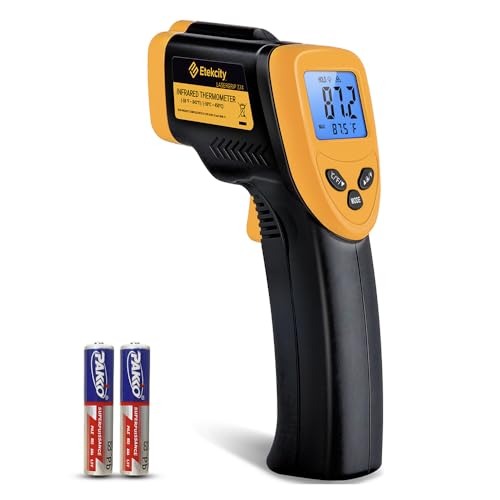 | Etekcity Lasergrip 774 non-contact IR thermometer | Editor's Choice | Popular 12:1 optics class for quick cup wall and mold surface scans during exotherm watch windows. | Check Price on Amazon |
 | ennoLogic eT650D dual-laser IR thermometer | Spot Size Clarity | Dual lasers help visualize the measured spot on dark silicone molds and matte wood blanks. | Check Price on Amazon |
 | KIZEN laser temperature gun (budget IR) | Bench Backup | Inexpensive second gun for loaner benches or duplicate stations where you still want trend data. | Check Price on Amazon |
IR thermometers measure radiated energy, not core temperature. For resin, they still win because the failure mode you are hunting is usually a runaway surface hotspot or a mold skin delta that precedes yellowing and cracks.
How We Tested
We tracked warming curves on dosed epoxy coupons and silicone mold skins, comparing repeatability against a grounded thermocouple reference where surface contact was practical.
What We Logged
- Display update rate during fast scans
- Repeatability on glossy versus matte surfaces at default emissivity
- Usability at arm’s length over a vacuum chamber lid
- Battery life impact from backlight-heavy sessions
Top Picks Reviewed
Etekcity Lasergrip 774 IR thermometer
Editor's ChoiceThe common maker default for non-contact temperature checks around resin, molds, and shop equipment.
Pros
- Straightforward UI for people who do not want industrial menus
- Wide community familiarity makes troubleshooting easier
- Good enough trend data for exotherm watch when technique is consistent
Cons
- Emissivity mistakes can lie on carbon-filled or glossy surfaces—learn the limitation
- Not a substitute for thermocouple data when you certify internal cure profiles
ennoLogic eT650D dual-laser IR thermometer
When you want clearer spot visualization on textured molds and dark composites.
Pros
- Dual-laser framing reduces guesswork on spot diameter
- Useful training tool for helpers who over-scan and average mentally
Cons
- Feature set still cannot remove emissivity physics—document your materials
- Price sits above basic Lasergrip-class units
KIZEN laser temperature gun
Budget backup for secondary stations or teaching exotherm monitoring without handing out premium tools.
Pros
- Low cost makes duplicate placement realistic
- Still adequate for “is this cup suddenly racing?” checks
Cons
- Build and sensor consistency vary more than mid-tier brands
- Treat readings as directional trends unless you validate against a reference
Technique Notes
- Scan the same landmarks each time: cup wall mid-height, mold exterior, ambient air away from heat sources.
- Matte spray dots or foil tape can stabilize emissivity on glossy cups—log your method.
- If the readout jumps wildly, check for steam, alcohol film, or LED glare into the lens.
FAQ
Can IR read the inside of a pour?
Not reliably. Use it for surface and skin temperatures; use thermocouples for core claims.
What emissivity should I use for silicone?
Start near 0.95 for matte silicone, then validate against a known reference point.
Is laser line safe?
Avoid eyes and reflective paths; treat lasers as real hazards around mirrors and foil.
Verdict
Lasergrip 774 remains the pragmatic default. eT650D helps teams that need clearer spot discipline. KIZEN is fine as a backup gun when the goal is trend alerts, not metrology bragging rights.