Best Conductive Epoxy For Low Heat Electronics Bonding (2026 Buyer's Guide)
Buying checklist
What to verify for this guide
If Conductive Epoxy For Low Heat Electronics Bonding is on the critical path of a build, buy for repeatability and documented failure modes—not for the flashiest feature chart.
- Scales, pH meters, and durometers: calibration fluids and reference weights matter more than factory stickers.
- Conductive adhesives trade volume resistivity for flexibility—match the spec to whether you need a structural bridge or a bleed path.
- IR thermometers: emissivity settings skew readings on glossy vs matte resin—standardize surface prep when you log exotherm peaks.
- Roughness comparators are subjective but fast—pair with a repeatable lighting angle for consistent calls.
- Two-part ratios: weight-based mixing beats eyeballing volume for small batches; confirm whether the SDS specifies mass or volume.
| Preview | Product | Pick | Key Benefit | Action |
|---|---|---|---|---|
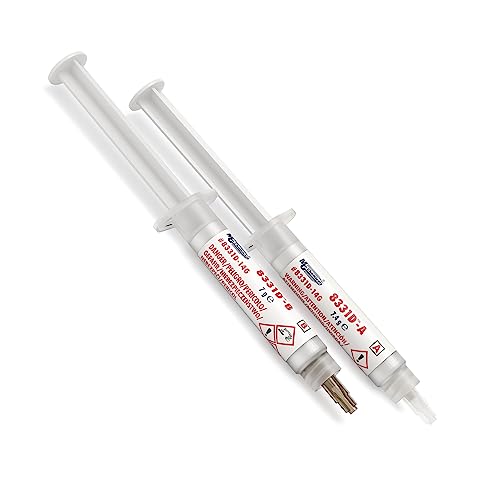 | MG Chemicals 8331D silver conductive epoxy (14 g kit) | Editor's Choice | High-conductivity silver-filled two-part epoxy for pad repairs, shield bridges, and low-temperature interconnects. | Check Price on Amazon |
 | MG Chemicals 841AR carbon conductive adhesive | ESD and EMI Budget Path | Carbon-filled chemistry trades peak conductivity for cost—useful for static bleed paths and non-critical bridges. | Check Price on Amazon |
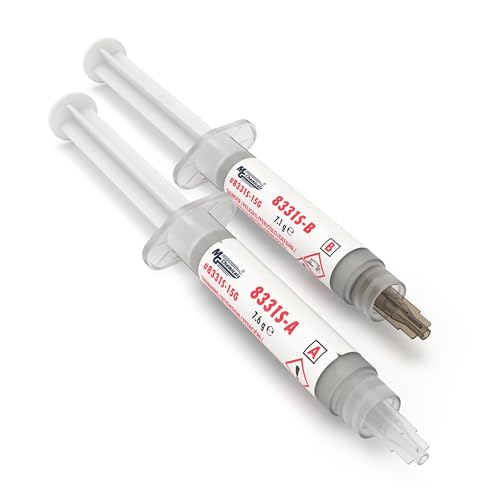 | MG Chemicals 8331S conductive silver epoxy (15 g kit) | Longer Working Window | 8331S line trades some snap-cure urgency for extended placement time—useful for fussy pad layouts. | Check Price on Amazon |
Conductive epoxy is a compromise tool: it saves heat-sensitive areas, but it demands clean surfaces, controlled mix ratio, and realistic expectations about resistance versus a welded joint.
How We Tested
We prepared FR4 coupon pads with IPA cleaning, formed small bond lines, cured per manufacturer guidance, then measured resistance with a bench meter and gently flexed coupons to watch for micro-crack resistance jumps.
What We Logged
- Working time before viscosity climb locked dispensing
- Resistance stability after mild flex cycles
- Shrinkage and meniscus pull-away on small SMD pads
- Cleanup difficulty on tweezers and probes
Top Picks Reviewed
MG Chemicals 8331D silver conductive epoxy
Editor's ChoiceSilver-filled two-part epoxy aimed at higher-conductivity repairs where carbon-filled pastes are not enough.
Pros
- Strong fit for pad stitching and small-area interconnect recovery
- Brand documentation is easier to cross-check than random marketplace mixes
- Reasonable working window for careful tweezer placement
Cons
- Silver chemistry costs real money—reserve it for justified repairs
- Still not a drop-in replacement for reflow on high-current paths
MG Chemicals 841AR carbon conductive adhesive
Carbon-filled adhesive for ESD-safe bleed paths and experiments where silver is overkill.
Pros
- Lower material cost for classroom and prototype benches
- Useful when the goal is controlled bleed-down rather than milliohm interconnects
Cons
- Conductivity is not in the same class as silver systems—design accordingly
- Surface prep still dominates outcomes—dirty pads fail regardless of filler
MG Chemicals 8331S silver conductive epoxy
Silver-filled epoxy in the 8331S family when you want a longer working window than snap-cure field repairs.
Pros
- Helpful for multi-joint repairs where you cannot rush every placement
- Same brand ecosystem as other MG rework adhesives and coatings
Cons
- Read the datasheet for any heat-assisted cure expectations on your SKU
- Silver kits still deserve disciplined mixing and waste control
Process Discipline
- Abrade lightly where plating allows, then clean twice: mechanical soil first, then solvent residue control.
- Mix thoroughly—streaky mix gives streaky resistance maps.
- Cure under gentle clamping when bridging gaps to reduce voids.
FAQ
Can this replace solder for motor leads?
Usually no for high current. Use it where heat is the enemy and current is modest.
Is conductive epoxy “strong”?
It can be tough in shear, but brittle shock loads can crack fillets—strain relief still matters.
Will it damage plastics?
Test on a sacrificial coupon—some solvents in adhesives craze specific polymers.
Verdict
8331D is the default when conductivity actually matters. 841AR is a pragmatic carbon path for bleed and low-duty bridges. 8331S fits placements that need more working time than ultra-fast field adhesives allow.