Best Precision Gram Scale For Micro-Batch Resin Formulations (2026 Buyer's Guide)
Buying checklist
What to verify for this guide
Most returns on Precision Gram Scale For Micro-Batch Resin Formulations gear trace to one ignored constraint: environment, chemistry, or ergonomics. Filter for your real bench first.
- Precision Gram Scale For Micro-Batch Resin Formulations purchases should start with SDS and cure profiles, not influencer unboxings—exotherm and VOC reality lives there.
- Polymer clay and conditioning: old stock and temperature cycling change workability; plan conditioning time into batch schedules.
- Scales, pH meters, and durometers: calibration fluids and reference weights matter more than factory stickers.
- Conductive adhesives trade volume resistivity for flexibility—match the spec to whether you need a structural bridge or a bleed path.
- Epoxies and silicones hate contaminated mixing—dedicated cups and sticks are cheaper than ruined pours.
| Preview | Product | Pick | Key Benefit | Action |
|---|---|---|---|---|
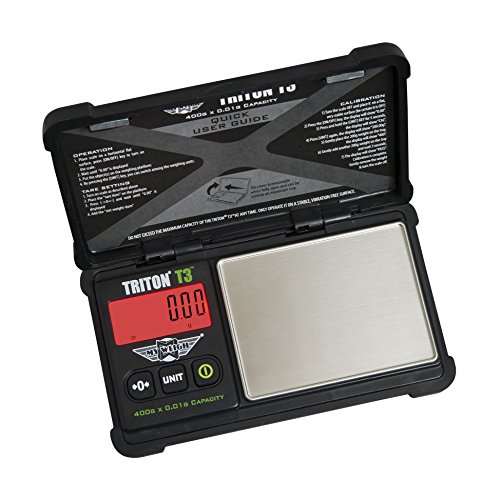 | My Weigh Triton T3-400 digital pocket scale | Editor's Choice | 0.01 g readability in a rubber-armored pocket format—strong for pigment and catalyst splits on small batches. | Check Price on Amazon |
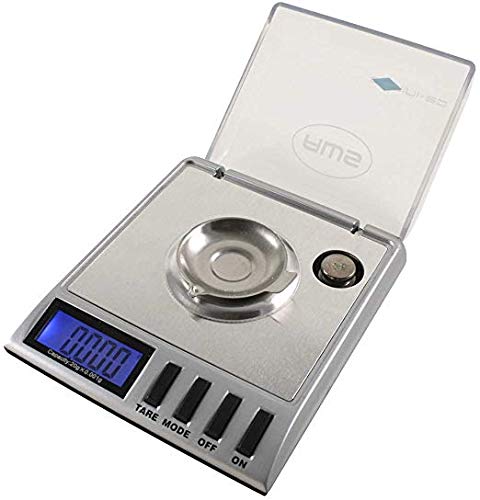 | American Weigh AWS-100 digital pocket scale | Bench Classic | Ubiquitous AWS-100 class for hundredths work when you want a second scale reference without boutique pricing. | Check Price on Amazon |
 | Ohaus Ranger Count 3000 counting scale (RC41M15 class) | Production Reference | Heavier counting-scale mindset for shops that treat grams like inventory, not kitchen guesses. | Check Price on Amazon |
Micro-batch chemistry is a measurement problem first. If your scale hunts, your “0.3 g catalyst” is fiction.
How We Tested
We used class weights near 1 g, 10 g, and 100 g targets, logged settle time after tare, and repeated additive pours while watching digit creep with a shop fan on low.
What We Logged
- Stabilization time after incremental 0.1 g additions
- Platform wobble with tall narrow mixing cups
- Drift after five minutes idle
- Battery access during mid-batch panic
Top Picks Reviewed
My Weigh Triton T3-400 pocket scale
Editor's ChoiceRubber-armored pocket scale with 0.01 g readability for pigment and catalyst work where bench knocks are normal.
Pros
- Readable hundredths class without boutique fragility
- Good training tool for students learning slow-pour discipline
Cons
- Capacity ceiling arrives fast on large resin batches—pair with a kilogram scale for A/B bulk
- Still hates vibration—isolate from compressors
American Weigh AWS-100 pocket scale
The common AWS-100 reference for hundredths pours when you want a second scale or a loaner bench unit.
Pros
- Community familiarity makes troubleshooting faster
- Compact footprint survives crowded pigment stations
Cons
- Air currents still lie—use a wind shield for picky additives
- Not a substitute for industrial counting scales at true production rates
Ohaus Ranger Count 3000 counting scale
Industrial counting-scale mindset for shops that batch pigments and fillers with traceability expectations.
Pros
- Built for repetitive weighing workflows beyond hobby pocket limits
- Useful when you stop trusting kitchen scales for paid jobs
Cons
- Footprint and price are serious—overkill for occasional pours
- Still requires operator discipline—hardware cannot fix sloppy logs
Technique
- Warm resin and hardener before weighing—temperature changes density surprises.
- Tare per ingredient; never reuse a stale tare after moving cups.
- Use a stable puck or wide cup to reduce tippy load-cell oscillation.
FAQ
0.01 g versus 0.1 g?
If you dose catalysts and pigments at single-digit grams, hundredths matter.
One scale or two?
Many shops run a kilogram class for bulk A/B and a pocket class for additives.
Calibration?
Check with known weights monthly—or whenever digits feel “optimistic.”
Verdict
Triton T3-400 is the best pocket hundredths pick here. AWS-100 remains the classic backup reference. Ohaus Ranger fits production counting workflows beyond hobby throughput.